Managing an Offshore Team Long-Term: What Changes After the First 90 Days
Key Summary — Managing an Offshore Team Long-term:
- The 90-day mark is where management style needs to shift: fewer daily check-ins, more outcome-based KPIs and the first real performance conversation.
- At 6 months, formalising an expanded role through a proper role review, rather than letting responsibilities accumulate informally, protects both parties.
- Replacing an embedded offshore team member costs the equivalent of 50–150% of that role’s annual salary when recruitment, onboarding and lost productivity are factored in
- Offshore teams that deliver the best long-term results are those treated as genuine team members: included in broader team communications, given structured performance feedback and offered a path for professional development.
- Evoke Projects grew revenue by 150% over two years using a managed offshore model. It’s an outcome driven by how the offshore relationship was structured and maintained over time.
- Scaling the team is the natural next step when the model is working.
- Adding roles is significantly easier once trust, systems and workflows are already established.
Most of the advice available on offshore staffing is about the beginning: how to decide whether to offshore, which roles to start with, how to onboard the hire, what good looks like at 90 days. That content exists for a reason: the early phase is where most offshore arrangements succeed or fail.
But the 90-day milestone is not the finish line. It is the point at which the training wheels come off.
This article picks up where onboarding ends. If you are still working through the initial setup, ‘In-House vs Offshore Staffing in the Philippines: What’s Best for You?’ covers the hiring and onboarding timeline in detail, and ‘Closing Outsourcing Gaps’ addresses the most common early-phase failure points, including the onboarding cliff.
What Changes at 90 Days
The first three months of an offshore engagement are intensive by design. The offshore team member is learning your systems, your standards and your working style. You are learning their capabilities, their communication patterns and where they need more guidance.
There is typically more check-in contact, more review cycles and more patience extended in both directions.
At around the 90-day mark, assuming onboarding has gone well, something should change in how you manage the relationship.
If it does not, two problems tend to emerge: the offshore team member feels micromanaged despite having demonstrated competence and the Australian business owner continues carrying a management overhead that the model was supposed to reduce.
The Shift from Task Management to Outcome Tracking
Early-phase management is necessarily task-focused: what did you do today, is this specific thing done, how is this particular process going. That level of granularity makes sense when someone is still learning.
Long-term management needs to move toward outcomes.
The question shifts from ‘did you complete the task?’ to ‘did we achieve the result?’. This distinction matters because it changes the relationship from supervisor-and-worker to something closer to a genuine working partnership. It also scales better; you cannot sustainably review every task an offshore team member completes while also running your business.
In practice, this means defining outcome-based KPIs for the role rather than tracking hours or task lists.
The First Real Performance Conversation
The 90-day mark is typically the first point at which a genuine, structured performance conversation is warranted.
It’s a deliberate review that covers what is working, what is not, where the role might evolve, and what the offshore team member’s own experience of the arrangement has been.
This conversation is important for three reasons.
- It signals that performance is taken seriously in both directions.
- It gives the offshore team member an opportunity to raise issues that may not surface in day-to-day communication
- It sets the expectation that reviews will happen regularly, which is one of the most reliable drivers of long-term retention.
If you are working with a managed offshore provider, your account manager should be involved in structuring or supporting this review.
One of the practical advantages of a managed offshore staffing solutions model is that performance management infrastructure is already in place. The 90-day review is a natural checkpoint in an ongoing process, not something you need to design from scratch.
The Six-Month Mark: Renegotiating Scope Properly
Scope creep is one of the most common and least-discussed problems in long-term offshore arrangements. It happens gradually: the offshore team member is performing well, the Australian business owner has confidence in them, and additional responsibilities start to accumulate. Sometimes it happens with a conversation, sometimes without one.
By the six-month mark, it is common for an offshore team member’s actual responsibilities to look meaningfully different from the role description they were hired against.
However, that is not inherently problematic. Roles should evolve as trust develops and as the business changes. The problem is when the scope expands without a corresponding review of expectations, workload and, where appropriate, compensation.
How Scope Creep Happens (and Why It Matters)
Scope creep in offshore arrangements is usually well-intentioned. The offshore team member is available, capable and willing. The business owner or manager has a task to be done and knows the offshore hire can handle it.
A direct message is sent. The task gets done. Then it happens again. And again. Within a few months, the offshore team member is carrying out a role that is 40% larger than the one they were recruited and compensated for.
The damage is cumulative and often invisible until retention becomes an issue. An offshore team member who feels their responsibilities have grown but their recognition has not (in terms of formal acknowledgement, compensation or simply being told (‘you’re doing a great job and we see it’) is a flight risk.
And replacing an embedded offshore hire is not cheap or quick.
There are two types of providers that already serve parts of this sector well, and Twoconnect’s model is different from both, not a replacement for either.
How to Formalise an Expanded Role Properly
The six-month mark is a natural trigger for a role review. The conversation does not need to be complicated, but it does need to happen deliberately rather than by drift. Cover these points:
- Review the actual role versus the original scope. List what the offshore team member is currently doing, and compare it to their original role description. Identify what has been added, what has been deprioritised and whether the current workload is sustainable.
- Acknowledge the expansion explicitly. If responsibilities have grown significantly, name it. This simple act has a disproportionate effect on how valued the offshore team member feels. Words to the effect of, ‘We’ve noticed how much you’re taking on, and we want to talk about it properly’ go a long way where acknowledgement is concerned.
- Decide whether a formal role adjustment is warranted. This might mean a revised position description, a pay review, a change in reporting structure or simply a clearer delineation of primary versus secondary responsibilities.
- Document whatever is agreed. The offshore partner’s HR function should update role documentation to reflect any formal changes. This protects both parties and creates a clear reference point for the next review cycle.
Case Study: Evoke Projects — What Long-Term Offshore Management Delivers
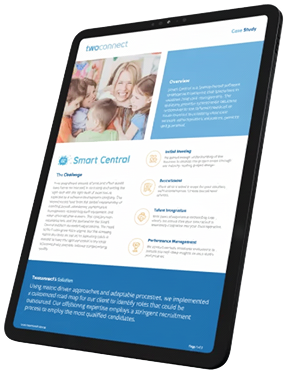
Evoke Projects is a Sydney-based interior design, construction and project management firm specialising in workplace, education, veterinary and healthcare projects. When rapid growth outpaced their local hiring capacity, they worked with Twoconnect to build an offshore team in the Philippines.
Twoconnect implemented a custom roadmap using a metric-driven approach and adaptable processes, with rigorous recruitment of highly qualified candidates. Over time, the offshore team grew to cover four distinct functions:
- Estimators provided accurate estimates, budgets and cost plans for multiple projects, ensuring timely tender submissions
- Finance Officer managed financial reporting, budget preparation, balance reconciliations and month-end closing
- Interior Designers met diverse client demands using computer-aided design skills
- Marketing Administrator managed communication channels and supported marketing efforts, including the annual Successful Start-up Summit
The outcome over a two-year period: significant cost savings and 150% revenue growth. That outcome came from how the offshore relationship was built and managed over time, expanding from an initial set of roles into a multi-function offshore capability that ran as a genuine extension of the Evoke onshore team.
Jerry Kennard, CEO of Evoke Projects, spoke directly to what changed once Twoconnect managed the offshore arrangement: “We tried other avenues of offshore employment, directly engaging with individuals. The issues we had was accountability. Working with Twoconnect has taken that issue out of the way. The passion and expertise of the Twoconnect management team have been absolutely vital in the success of growing and maintaining our offshore team.”
The accountability point Kennard raises is the central long-term management challenge most Australian business owners face when they start thinking about offshore staffing solutions.
The managed model resolves it structurally by placing performance management, HR liaison and quality oversight in the hands of a local team lead who monitors the offshore hire on an ongoing basis.
For further context on the cost-saving outcomes that underpin this kind of long-term growth, see Twoconnect’s analysis of how Australian companies save costs with outsourcing.
Retention: The Metric Most Businesses Ignore Until It’s a Problem
Retention is the least glamorous part of offshore team management and the most financially consequential. The businesses that treat it as something relevant only when someone hands in notice tend to cycle through offshore hires at a cost that quietly eats away at the savings the model was supposed to deliver.
What It Actually Costs to Replace an Embedded Offshore Hire
The true cost of replacing any employee, onshore or offshore, is consistently underestimated. Research across Australian HR literature places the cost of replacing a mid-level employee at between 50% and 150% of their annual salary when recruitment fees, onboarding, training and lost productivity are fully accounted for.
For an offshore role, the dynamics are slightly different but the financial logic is the same. When an embedded offshore team member leaves, especially one who has learned your systems, your standards, your clients and your working rhythm, know that you are losing accumulated institutional knowledge that took months to build.
The replacement hire starts that knowledge-building process from zero.
The productivity gap during the re-recruitment and re-onboarding period typically runs 6–12 weeks, depending on role complexity.
For a role central to your operational delivery, the gap is felt immediately and across the business.
What Actually Drives Retention (Beyond Pay)
Pay matters and should be reviewed regularly, but retention research consistently identifies factors beyond salary as the primary drivers of long-term tenure. For offshore teams specifically, the following are the most reliable:
☑ Genuine inclusion in team communication
☑ Structured, regular feedback
☑ Recognition of contribution
☑ Career development conversations
Setting Outcome-Based KPIs (Not Just Task Lists)
One of the most practical shifts in long-term offshore team management is moving from task-based tracking to outcome-based measurement. Task lists tell you what was done; KPIs tell you whether it made a difference.
The distinction matters for two reasons:
- Outcome-based KPIs give the offshore team member meaningful targets rather than a to-do list, which is more motivating and produces better results.
- They make performance conversations easier, because both parties have agreed in advance what success looks like.
| Role Type | Task-Based Tracking (Avoid) | Outcome-Based KPI (Use Instead) |
|---|---|---|
| Estimator | Hours logged per day | Tenders priced per week; quote accuracy rate |
| Finance Officer | Tasks completed checklist | Month-end closing on schedule; reconciliation error rate |
| Project Coordinator | Emails responded to | RFI closure rate; document register currency |
| Marketing Administrator | Posts scheduled | Engagement rate; campaign deliverables on time |
| Customer Support Officer | Tickets closed per day | First-contact resolution rate; customer satisfaction score |
For a deeper treatment of productivity measurement frameworks for offshore teams, Twoconnect’s article on how offshore teams enable higher productivity with lower overheads covers the question of productivity metrics in detail.
When and How to Scale the Offshore Team
The Evoke Projects case study is instructive here: the offshore team did not arrive fully formed. It grew from an initial set of roles into a multi-function offshore capability covering estimating, finance, design and marketing.
That progression was possible because the foundation was solid: clear role design, proper onboarding, managed performance and a partner who handled the operational complexity of employing offshore staff.
When the offshore relationship is working well, scaling the team is the natural next step for a growing business.
The logic is straightforward: if one offshore hire has freed up capacity and delivered measurable results, a second or third hire extends those gains without proportionally increasing overhead.
The Right Time to Scale
In practice, the signals that a business is ready to add offshore roles are similar to the signals that first prompted the offshore arrangement:
☑ The onshore team is at capacity again.
☑ There is a specific, well-defined role that cannot be filled locally.
☑ The offshore team member is being pulled into work outside their role.
What Makes the Second Hire Easier Than the First
Businesses that have gone through one offshore engagement are significantly better positioned for the second. The systems are already in place: the communication tools, the file-sharing setup, the quality review processes, the onboarding documentation.
The managed offshore partner already knows the business. The onshore team already knows how to work with offshore colleagues.
The result is a faster, lower-risk second engagement.
- Onboarding is more efficient because the business already has a documented process.
- Integration is faster because the team culture is already adapted to remote collaboration.
- The learning curve, which is the source of most early-phase friction, is substantially shorter.
For a full picture of the roles most commonly added at this stage, Twoconnect’s overview of key roles you can outsource to the Philippines covers the full range of offshore positions across functions and industries.
The Long-Term Offshore Management Timeline at a Glance
| Phase | What Changes | What Stays the Same |
|---|---|---|
| 90 days | Daily check-ins → weekly reviews; hand-holding → outcome tracking; first performance conversation | Clear communication; documented processes; regular feedback |
| 6 months | Scope renegotiation; expanded role conversations; pay review if warranted | Quality standards; supervision accountability; KPI framework |
| 12 months+ | Career development conversations; team scaling decisions; offshore team as a strategic asset | Retention focus; cultural inclusion; performance management rhythm |
Building an Offshore Team That Performs Over Time
The businesses that get the most from offshore staffing solutions are the ones that manage the relationship deliberately once it becomes long-term: shifting to outcome-based measurement, reviewing scope before it drifts, treating retention as a business metric and scaling when the conditions are right.
If you are at or approaching the 90-day mark with your offshore team and want to structure the next phase well, Twoconnect’s managed offshore staffing services include ongoing performance management, HR support and account management as standard, so the long-term management work is supported.
To discuss what that looks like for your business, get in touch with the team directly.