Offshore Customer Service Teams: A Setup Guide for Australian SMEs
Key Summary — Setting Up Offshore Customer Service Teams for Australian SMEs
- Offshore customer service works well for Australian SMEs when the scope is right: email, chat, order processing and back-office support offshore cleanly.
- Phone support where customers expect an Australian accent, and complex technical support needing deep product judgement, generally don’t offshore well
- A full-time Australian customer service rep costs up to $70,000 a year including super and benefits; offshoring the same role to the Philippines typically cuts this by 50–70%.
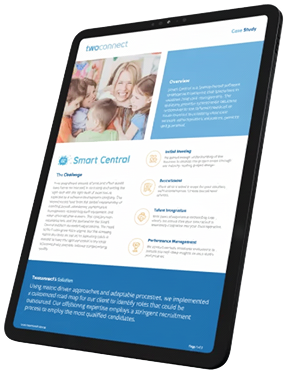
- Smart Central, a Sydney-based childcare software company, used offshore Customer Support Officers to handle a surge in client queries following a major system rollout, contributing to 150% revenue growth.
- The biggest barrier to a first offshore hire is management time; a managed 360° model removes the 4–6 hours a week most DIY guides say you need to commit.
- Most SMEs start with one clearly scoped role, usually email or chat support, before expanding further
Support volume rarely grows in a straight line. A product launch, a marketing push or a seasonal spike can double the number of customer queries in a matter of weeks, while headcount budgets move at a much slower pace.
For most Australian SMEs, this gap shows up as a stretched local team fielding queries between everything else they are meant to be doing. It is exactly the position Smart Central, a Sydney-based childcare software provider, found itself in after a major product rollout drove a wave of client queries that outpaced its in-house capacity.
Its response, examined in detail later in this guide, is a useful reference point for any SME weighing up its first offshore customer service hire.
This guide covers what to offshore and what to keep local, the real cost savings for an Australian customer service role and a practical, no-nonsense setup process, so you can make a decision with a clear picture of what offshore customer service can and cannot do for your business.
What Aspects of Customer Service Work Offshore (And What Doesn’t)
Being upfront about where offshore customer service arrangements in the Philippines genuinely perform well, and where they don’t, is a matter of setting the engagement up for success rather than overselling it. The honest, industry-consistent picture looks like this:
|
Works Well Offshore |
Doesn’t Work Well Offshore |
| ✓ Email and live chat support
✓ Order processing and returns handling ✓ FAQ and standard-response handling ✓ CRM data entry and record updates ✓ Back-office ticket triage and routing |
✗ Phone support where customers expect an Australian accent
✗ Complex technical support requiring deep, product-specific judgement ✗ Escalations that need in-the-moment executive decision-making |
This reflects a pattern seen consistently across the offshore customer service industry: English proficiency among Filipino support professionals is very high, but accents typically skew toward American rather than Australian, which matters most in voice channels, where customers expect to hear a local accent.
The practical takeaway is straightforward: start with email and chat scope, where accent doesn’t factor into the customer experience, before considering a voice channel.
The Real Cost of an Australian Customer Service Rep

A full-time customer service representative in Australia costs up to $70,000 a year once wages, superannuation and other benefits are factored in.
Outsourcing the same role to the Philippines can reduce that cost by 50–70%, depending on the offshore staffing provider.
|
Cost Factor |
Estimate |
| Full-time AU customer service rep (wages, super, benefits) | Up to $70,000 per year |
| Typical saving offshoring the same role to the Philippines | 50% to 70% |
Treat this as a realistic planning benchmark for a single role rather than a guaranteed outcome for every business; actual savings depend on the scope of the role, the seniority required and how the engagement is structured.
Signs Your Business Is Ready to Offshore Customer Service
A few signs it’s worth having the conversation now, rather than waiting until things feel unmanageable:
- You’re relying on the same one or two people to cover support, and there’s no real backup if either of them is away or leaves
- Customers have started commenting on slower replies, or you’ve noticed a dip in satisfaction scores without a clear internal cause
- You’ve looked at hiring locally and the cost, or the time it’d take to recruit, doesn’t match how urgent the problem feels
- Support requests are being handled reactively, in whatever order they land, rather than against any defined process or standard
- You can name the volume of queries you’re getting, but not how quickly or consistently they’re actually being resolved
If two or three of these sound familiar, the case for a first offshore customer service role is probably already there.
Setting Up the Offshore Customer Service Role: What to Get Right From Day One
A tighter, more practical version of the setup process used across the industry comes down to four things worth getting right before you recruit:
- Document your current support process and the most common query types before you start recruiting, so the role is scoped against real, existing demand rather than a guess
- Define clear quality metrics upfront: response time, resolution rate and customer satisfaction, so both you and the new hire know what good looks like from week one
- Start with email or chat scope before considering a voice channel, for the reasons set out earlier in this guide
- Plan realistic onboarding time; the first few weeks need close, regular review, not hands-off delegation, before the role can run more independently
Tools and Systems That Make Offshore Customer Service Work
Offshore customer service arrangements in the Philippines can run more smoothly with a small set of practical systems in place from day one:
- Shared helpdesk or CRM access, rather than managing support requests through personal inboxes.
- A single primary communication channel for day-to-day coordination, rather than juggling several tools or relying on email alone.
- Documented FAQ and escalation procedures, so common scenarios have a clear, repeatable answer and edge cases have a defined path upward.
- Screen-recorded training walkthroughs for common scenarios, which cut down repeated explanation and give new hires something to reference independently.
Who Manages the Offshore Customer Service Team From Day-to-Day?
The most common objection to a first offshore customer service hire is management capacity. Industry guidance on setting up Philippines-based teams is consistent.
A business needs to commit real time, often cited at around 4–6 hours a week, particularly in the first 2–3 months, for training, communication and review. For a stretched SME owner, that is often the deciding factor against going ahead at all.
A managed 360° offshoring model changes this equation. Rather than handling recruitment, onboarding, HR and day-to-day performance management yourself, a managed offshoring partner builds and supports the structure around the role. They:
☑ Recruit a candidate matched to the scope you’ve defined
☑ Run a structured onboarding period
☑ Maintain ongoing performance management with regular reviews
Twoconnect’s practical guide to boosting team performance through managed offshoring sets out this distinction between traditional, self-managed outsourcing and a fully managed model in more detail.
In practice, this directly addresses the “I don’t have four to six hours a week to manage this” concern: the structure is built into the engagement rather than left to the business owner to invent.
It is also worth noting that customer support is the most in-demand outsourced business process from the Philippines, with 39.2% of companies surveyed citing the Philippines specifically for this function. Filipino professionals are widely recognised for neutral accents and strong English proficiency that suit client-facing roles well, particularly in voice channels.
Getting Started With Offshore Customer Service

Most Australian SMEs don’t begin by offshoring their entire support function.
The realistic starting point is one offshore customer service role handling a defined slice of volume, most commonly email support, so the scope is easy to manage and easy to review while both sides get used to the working relationship.
From there, businesses typically expand into chat, then order processing and back-office tasks, once the first role has proven the workflow. For a broader picture of which roles beyond customer service suit offshore delegation, the guide to key roles you can outsource to the Philippines covers the wider landscape.
Thinking About Building Your Own Offshored Customer Service Team?
If you’re an Australian SME weighing up your first offshore customer service hire, getting the scope, tools and management structure right from the outset makes the difference between a smooth rollout and a stalled one.
Twoconnect’s managed 360° model handles recruitment, onboarding, HR and performance management so you don’t have to build that structure yourself.
Explore Twoconnect’s full range of managed offshore services or get in touch for a consultation to talk through what a first offshore customer service role could look like for your business.